
Flight Reservation vs Dummy Ticket: What’s the Difference?
Real Airline PNR, Same-Day Delivery
- Real PNR
- Instant
- Embassy-Compliant
- Schengen, UK, US & More
- Thousands Served
The difference between a verifiable flight reservation and a dummy ticket comes down to one thing: whether the booking actually exists in an airline's system. Here's how each is produced and how each fails verification.
How It Works — Three Simple Steps
Our easy visa booking solution is designed to save you time without any confusion. Here’s what the process looks like from start to finish.
Place Your Order
Tell us your travel dates, destination, and visa type. No passport copies or airline payments needed at this stage.
We Prepare Your Documents
Our team creates your visa flight reservation and hotel booking confirmation — fully verifiable and formatted for embassy submission.
Receive & Submit
Your travel itinerary for your visa application lands in your inbox within minutes. Download, print, and attach to your application.
Sample Documents
See exactly what you receive — an example flight reservation, hotel reservation and visa cover letter.
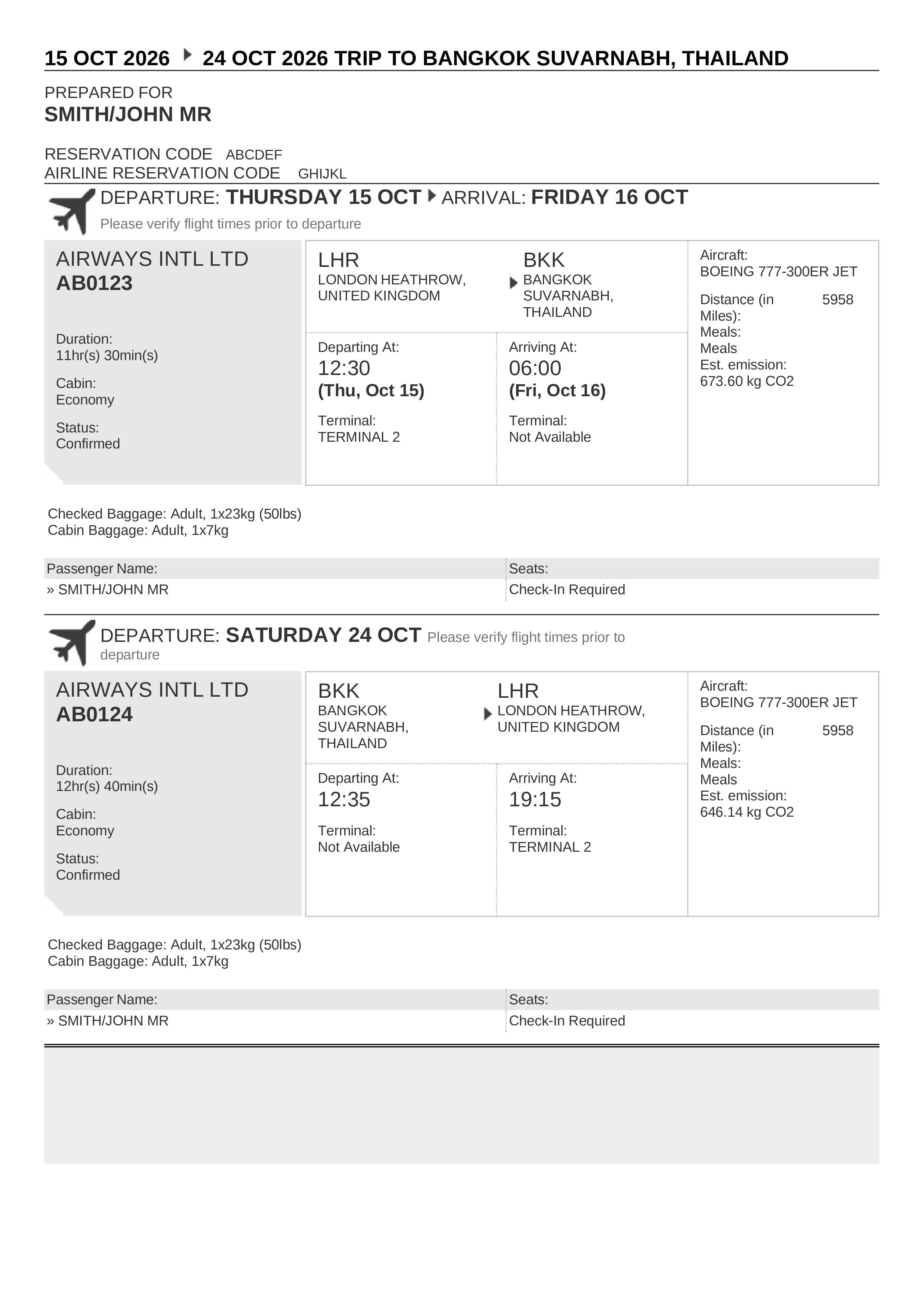
Flight Reservation Sample
A verifiable flight itinerary with a real airline PNR / booking reference — accepted by embassies as proof of onward travel.
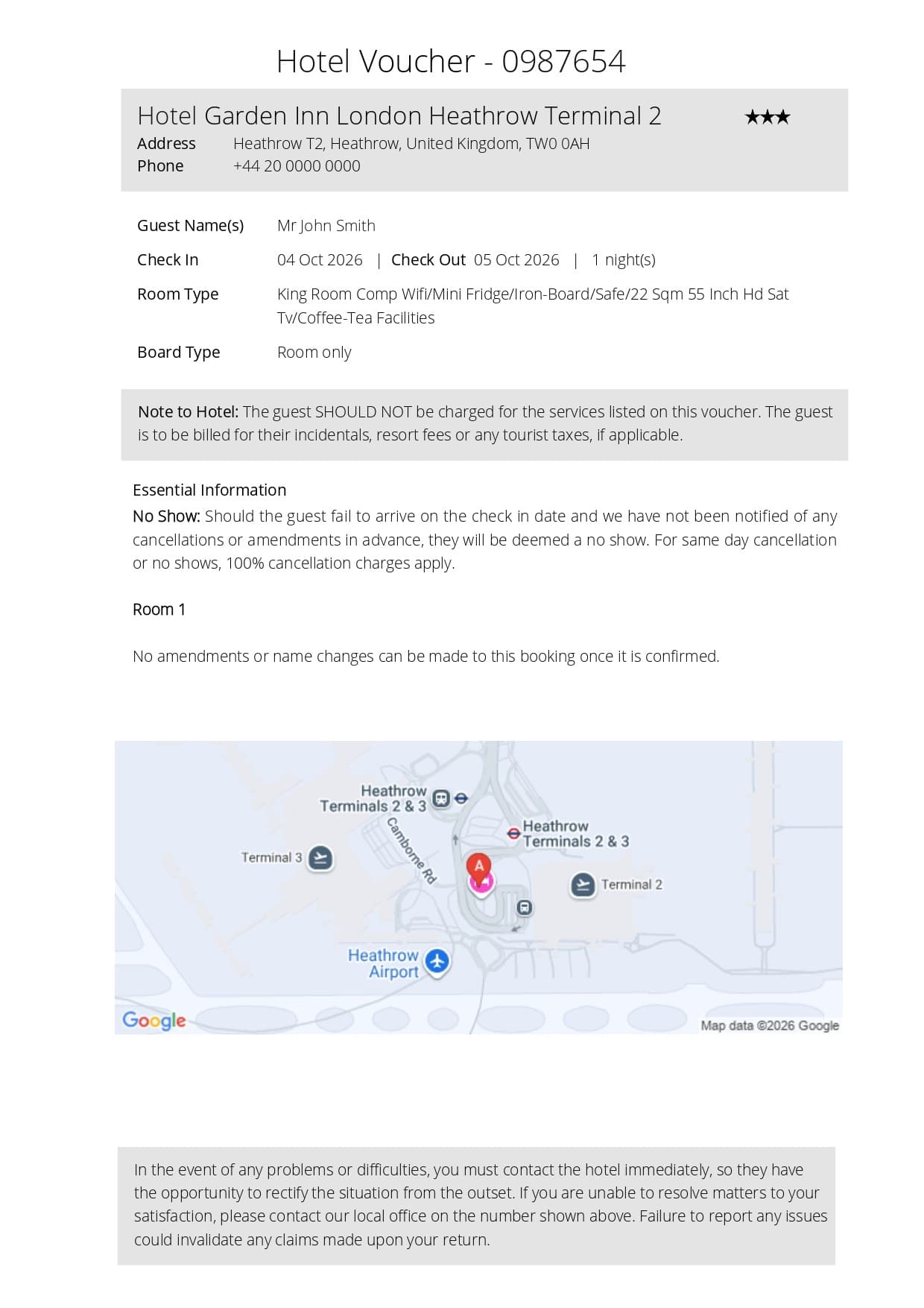
Hotel Reservation Sample
A confirmed hotel booking showing your stay dates, hotel details and a verifiable reference number for your application.
Cover Letter Sample
A professionally formatted cover letter you can submit alongside your visa application to explain your trip.
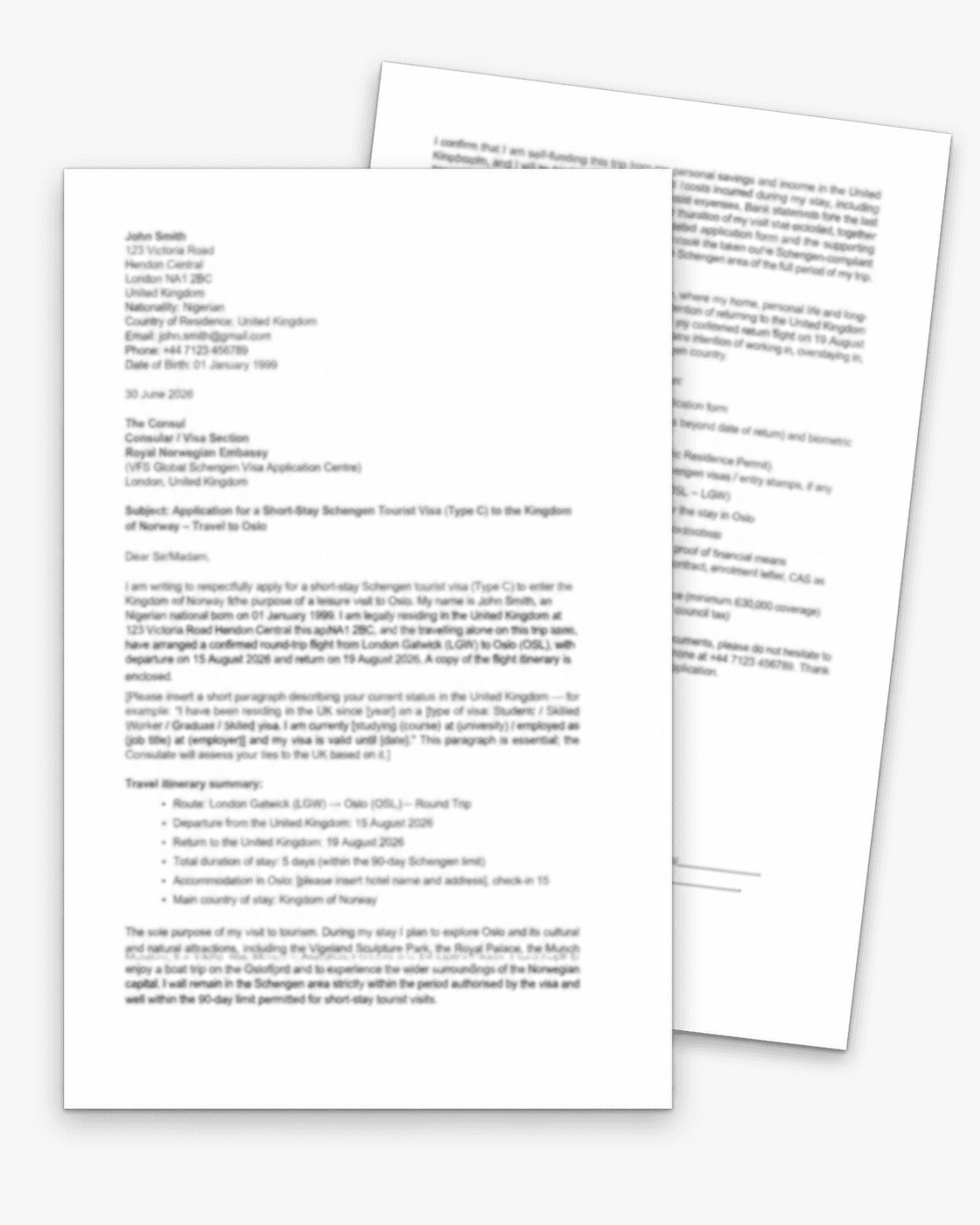
These are illustrative samples — personal details have been redacted. Your own documents are generated with your travel details and a genuine, verifiable reservation reference suitable for your visa application.
Choose Your Ticket Validity
Select the validity period that best suits your needs. All tickets include verifiable PNR codes and instant delivery.
Express — 48 hours
For same-day & priority appointments
- Verifiable Airline PNR
- Valid for Embassy Submission
- PDF Flight Reservation
- Instant Delivery
Standard — 7 days
Best for US, UAE & most embassies
- Verifiable Airline PNR
- Embassy Accepted Reservation
- PDF Download
- Instant Delivery
- Email Confirmation
Embassy-Safe — 14 days
Recommended for Schengen, Canada, Australia & other slow-processing embassies
- Verifiable Airline PNR
- Embassy Accepted Reservation
- PDF Download
- Extended Validity for Long Processing
- Instant Delivery
Cover Letter — Just £11.00
Add a professional cover letter to strengthen your visa application. Choose from the following types:
Visa Application Cover Letter
Professional letter explaining your travel purpose and visa application details
Immigration Cover Letter
Detailed letter supporting your immigration documentation and travel plans
Onward Travel Cover Letter
Letter confirming your onward travel arrangements for transit requirements
Business Travel Cover Letter
Formal letter for business visa applications with travel itinerary details
Flight Reservation vs Dummy Ticket: What’s the Difference?
The Core Difference
A flight reservation and a dummy ticket look identical at first glance — both are PDFs showing flight details, passenger names, and a six-character reference code. The difference is structural, not visual: a flight reservation is a real booking held in an airline's reservation system, and a dummy ticket isn't.
That distinction matters because every embassy verification check eventually queries the airline's system. A real PNR returns a live booking under your name; a fabricated code returns "booking not found." Same document on paper, opposite outcomes at the verification step.
How a Flight Reservation Is Produced
Real flight reservations are made through global distribution systems (GDS) — Sabre, Amadeus, or Travelport — the same platforms used by every legitimate travel agency. The booking process:
- The agent searches available flights for your route and dates.
- The agent makes a booking through the GDS, which creates a Passenger Name Record (PNR) and reserves the seat.
- The PNR is held in the airline's system for a defined period (24 hours by default, extended via GDS commands to 48 hours, 7 days, or 14 days).
- If payment is taken before the hold expires, the booking becomes a paid ticket. If not, the airline auto-cancels it.
Your reservation document is the PDF representation of that real booking. Embassy verification — whether by direct GDS query, airline website lookup, or airline contact — confirms the booking exists. More on PNRs and how they work.
How a Dummy Ticket Is Produced
Dummy tickets are PDFs created from templates. The seller takes a layout that mimics a real airline confirmation, fills in your name, dates, route, and a fabricated six-character code, exports as PDF, and emails the file. No booking is made anywhere — the document is purely visual.
This produces obvious tells if you know what to look for:
- The "PNR" doesn't return any data on the airline's "Manage Booking" page.
- The format may have small inconsistencies (wrong logo placement, mismatched fonts, generic disclaimer language).
- The price is suspiciously low — typically £3–£10, far below the £8–£12 GDS fee that any real travel agent must pay per booking.
Some sellers go to lengths to make their templates look identical to airline confirmations — but the PDF can never make the booking real. Embassy verification tests for the underlying booking, not the appearance of the document.
Verification: Where the Difference Becomes Visible
Every embassy fraud-detection workflow eventually performs a verification check. The three common routes:
- Direct GDS query — fastest, most authoritative. The consulate types the PNR into a Sabre/Amadeus/Travelport terminal and reads the result.
- Airline website lookup — the consulate uses the airline's "Manage Booking" page with the PNR plus passenger surname.
- Phone contact — the consulate calls the airline's fraud-detection liaison line with the PNR.
For a real reservation, all three return a live booking with the right name, route, and dates. For a dummy ticket, all three return "booking not found" or equivalent. You can run the same check yourself before submitting — if the airline's lookup returns "not found," the embassy will get the same result.
Embassy Outcomes
The outcomes for the two document types are starkly different:
Real flight reservation
Embassy verification confirms the booking. The application proceeds through the rest of the assessment. The reservation expires automatically at the end of its validity, with no follow-on charges if the visa is refused.
Dummy ticket
Verification returns "booking not found." The application is refused on document credibility grounds — typically referenced as "false documents," "misrepresentation," or "documentation incomplete" in the refusal letter, depending on the country.
The refusal stays on your immigration record. Future visa applications — to that country and to others — will see the previous refusal and apply additional scrutiny. The £5 saved on the dummy ticket costs you years of harder visa applications going forward.
Why Dummy Tickets Still Exist
Dummy ticket sellers thrive on three things: low prices, plausible-looking output, and the fact that not every embassy verifies every application. A dummy ticket can pass an embassy that doesn't verify, and that occasional success keeps the seller in business.
The trend is moving the wrong way for that business model. Embassy verification rates have climbed steadily since 2020 as fraud-detection technology has improved. UK Visas and Immigration's document fraud teams sample-verify reservations on borderline applications. Schengen consulates have direct GDS access at higher-volume embassies. US consular officers can flag PNRs for verification during interviews. The pool of "embassies that don't check" is shrinking every year.
Cost Comparison
The price gap between real reservations and dummy tickets is smaller than people think:
- Verifiable real reservation: £12 (48-hour) / £20 (7-day) / £35 (14-day).
- Dummy ticket: £3–£10.
The £8–£15 difference is what catches people who pick the dummy. The expected value calculation always favours the real reservation: if there's even a 10% chance the embassy verifies (a low estimate now), the cost of a refusal — plus permanent immigration record — overwhelms the £8–£15 saving by orders of magnitude.
How to Spot a Dummy-Ticket Seller
- Price below £10. No real GDS booking can be issued at this price; the GDS fee alone is £8–£12.
- "Instant download" claims. Real reservations require an actual booking through a GDS — a process that takes minutes, not seconds.
- No verification guarantee. Legitimate providers will help you verify your PNR with the airline before you pay or after delivery.
- Disclaimers like "for visa purposes only — do not attempt to fly." That's the seller acknowledging the document isn't a real reservation.
- Vague refund policy. Real reservation providers have clear policies about delivery time and what happens if the document fails.
If a seller hits two or more of those red flags, the document is a dummy ticket. Full 3-way comparison including real tickets.
What to Do If You've Already Bought a Dummy Ticket
Don't submit it. Verify the PNR yourself first — open the airline's "Manage Booking" page, enter the PNR plus your last name, and see if a booking comes up. If it returns "not found," you have a dummy ticket. Step-by-step verification guide.
Options at that point:
- Contact the seller and demand a real reservation. If they refuse or stall, dispute the charge with your card issuer.
- Order a real reservation from a verifiable provider before your embassy appointment. Order one here.
- Skip the previous document entirely — submitting a dummy ticket alongside a real one doesn't help, and the embassy may flag the duplication.
Related Topic Guides
- Flight reservation for visa — main service page
- What is a PNR in a flight reservation?
- Do embassies accept flight reservations?
- How to book a flight reservation for visa
- Onward ticket for boarding and visa-on-arrival
- 3-way comparison: reservation vs dummy ticket vs real ticket
- Verify any reservation before embassy submission
Order a Verifiable Reservation
For a real, GDS-backed flight reservation matched to your visa application, see our flight reservation page. Country-specific guides: Schengen, UK, US, Canada, Australia, UAE.